Latest
Meet Denis Cormier • Learn moreNS Liberal Leadership • Get the details

Lunenburg West MLA Becky Druhan Joins Nova Scotia Liberal Caucus

The Nova Scotia Liberal Caucus is welcoming Becky Druhan, MLA for Lunenburg West, to the team.

After spending the spring sitting as an Independent MLA, Druhan said her decision came after conversations with constituents and reflection on how she could best serve both her community and the province.

“This decision is about how I can best serve Lunenburg West and Nova Scotia,” said Druhan. “I believe the Liberal team shares my commitment to thoughtful, forward-looking leadership that delivers accountable government, strong public services, and economic opportunity. I appreciate the approach of both Iain Rankin and Derek Mombourquette in listening, collaborating, and staying focused on moving Nova Scotia forward. The Liberal team has the foundation to provide the leadership Nova Scotia needs, and I want to be part of rebuilding and strengthening that work.”

Interim Liberal Leader Iain Rankin said Druhan’s experience and collaborative approach will strengthen the caucus as the Liberals continue the process of rebuilding the party and holding the Houston government to account.

“Becky brings integrity, thoughtfulness, and a strong commitment to public service. She understands the challenges Nova Scotians are facing and shares the belief that government can be fiscally responsible while continuing to invest in healthcare, affordability, economic opportunity, and a sustainable future. We’re excited to welcome Becky to the Liberal team and look forward to working together to deliver practical solutions for Nova Scotians.”

As a member of the Liberal Caucus, Druhan will become Caucus Chair and assume the critic responsibilities for Health, Seniors and Long Term Care, Addictions and Mental Health, Public Works, Housing, Cyber Security and Digital Solutions, Service Nova Scotia, Communications, and the Nova Scotia Advisory Council on the Status of Women. She will also serve as a member of the Public Accounts, Community Services, Human Resources, and Health committees.

Back to Newsroom

Denis Cormier obtient l’investiture libérale pour l’élection partielle dans Chéticamp–Margarees–Pleasant Bay

Le Parti libéral de la Nouvelle-Écosse est fier d’annoncer que Denis Cormier a été choisi comme candidat libéral pour la prochaine élection partielle dans Chéticamp–Margarees–Pleasant Bay.

Denis Cormier habite dans la région depuis toujours et est profondément enraciné dans sa communauté. Il a commencé sa carrière en travaillant sur un bateau de pêche au homard comme aide-pêcheur, avant d’obtenir son diplôme en éducation au Nova Scotia Teachers College. Denis a consacré près de 30 ans à l’éducation comme enseignant et conseiller en orientation dans la communauté.

Après sa retraite, Denis est retourné en salle de classe comme enseignant suppléant au Strait Regional School Board et travaille comme adjoint dans un bureau de poste pour Postes Canada. Il est aussi bénévole, notamment comme président de la Margarees Rivers Association depuis 2024. 

« Je suis honoré d’avoir obtenu l’appui des libéraux de la région aujourd’hui », a déclaré M. Cormier. « Cette communauté a tant donné à ma famille et moi, et je suis prêt à travailler fort pour représenter les gens de Chéticamp–Margarees–Pleasant Bay et être une voix forte pour eux à l’Assemblée législative. Je crois sincèrement que les libéraux sont le parti qui saura défendre cette région et obtenir les investissements que notre communauté mérite. »

Avec Denis dans l’équipe, les libéraux sont prêts à se battre pour les services et les investissements dont la région a besoin, et à s’assurer que les communautés rurales ne soient pas mises de côté. Les récentes compressions budgétaires du gouvernement de Tim Houston dans des secteurs comme la culture et le tourisme mettent en péril des éléments clés de 

l’économie locale. Ce sont des secteurs qui soutiennent l’emploi, appuient les petites entreprises et contribuent au dynamisme de la région — et ils méritent plus d’appui, pas moins.

« Je suis très fier d’accueillir Denis dans l’équipe. Il comprend les défis auxquels sa communauté fait face et sera une voix forte pour eux », a déclaré Iain Rankin. « Il est encourageant de voir l’énergie et l’élan qui se développent dans la circonscription. J’ai hâte d’accueillir Denis à l’Assemblée législative comme premier député de Chéticamp–Margarees–Pleasant Bay. »

Back to Newsroom

Denis Cormier secures Liberal nomination for upcoming Chéticamp-Margarees-Pleasant Bay byelection

The Nova Scotia Liberal Party is proud to announce that Denis Cormier has been nominated as the party’s candidate for the upcoming byelection in Chéticamp–Margarees–Pleasant Bay.

Denis Cormier is a lifelong resident of the region with deep roots in the community. He began his career working on a lobster boat as a fisherman helper before he went on to receive his teaching degree from the Nova Scotia Teachers College. Denis dedicated nearly three decades to education as a teacher and guidance counselor in the community. 

After retirement, Denis returned to the classroom as a substitute teacher with the Strait Regional School Board and currently serves as a post office assistant with Canada Post. He has also volunteered as the President of the Margaree Rivers Association since 2024.

“I’m honoured to have earned the support of local Liberals today,” said Cormier. “This community has given so much to me and my family, and I’m ready to work hard to represent the people of Chéticamp–Margarees–Pleasant Bay and be a strong voice for them in the legislature. I truly believe Liberals are the party that will stand up for this region and fight for the investments our community deserves.”

With Denis on the team, Liberals are ready to fight for the services and investments this region needs, and to ensure rural communities aren’t overlooked. The Houston government’s recent budget cuts to areas like culture and tourism are putting key parts of the local economy at risk. These are the sectors that sustain jobs, support small businesses, and keep the region vibrant – and they deserve stronger support, not less.

“I’m so proud to have Denis on the team. He understands the challenges his community is facing and will be a strong voice for his community,” said Rankin. “It’s exciting to see the energy and momentum building in the riding. I look forward to welcoming Denis to the legislature as the first MLA for Chéticamp–Margarees–Pleasant Bay.”

Back to Newsroom

Manitoba sets social media age limit, Liberals say Nova Scotia should follow

With Manitoba Premier Wab Kinew recently announcing his government will set a minimum age of 16 for social media use, Nova Scotia Liberals are urging the Houston government to follow suit and join a growing number of provinces taking steps to protect children online.

A recent Angus Reid poll found that 75% of Canadians support banning social media for children under 16, reflecting widespread concern from parents and caregivers about the effects of online platforms on children’s wellbeing. Interim Liberal Leader Iain Rankin first tabled a bill that would create a minimum age of 16 for Nova Scotians last fall and participated in debate at the national Liberal convention earlier this month, where it was adopted as an official party policy.

“Manitoba is proof that provinces can take real action,” said Rankin. “When a government decides to put kids first, it doesn’t have to wait for federal direction. They can move, and Manitoba has just shown that.”

Momentum is also building in other provinces like Saskatchewan, where Premier Scott Moe has announced plans to launch public consultations on social media age restrictions. Together, these developments point to a growing national shift driven by increasing concern over youth mental health, online harms, and the pressures social media platforms place on children at increasingly young ages.”

“This isn’t about politics, it’s about protection,” said Rankin. “We’ve now seen Manitoba act, Saskatchewan begin consultation, and strong public support across the country. Nova Scotia shouldn’t be waiting while others do the work to protect young people online.”

Back to Newsroom

Liberals urge province to fund pelvic floor physiotherapy, close gap in women’s care

According to the IWK, 40 per cent of women experience pelvic floor disorders, yet for many, proven treatment remains out of reach. Today, the Nova Scotia Liberals are calling on the Houston government to follow the lead of other jurisdictions like Prince Edward Island, who is funding pelvic floor physiotherapy through a public pilot program.

Pelvic floor physiotherapy is widely recognized as the gold standard for treatment for a range of conditions, including pelvic pain, urinary incontinence, prolapse, and postpartum recovery. However, with appointments often costing upwards of $150, this essential care remains out of reach for many.

“Pelvic floor physiotherapy is a practical, evidence-based solution that could make a real difference in people’s lives and help address the gaps the IWK Foundation has identified,” said Interim Leader Iain Rankin. “When care that could prevent pain, surgery, and long-term complications isn’t affordable, the system isn’t working as it should. Covering pelvic floor physiotherapy is a practical step the government can take right now to improve care and reduce pressure elsewhere in the system.”

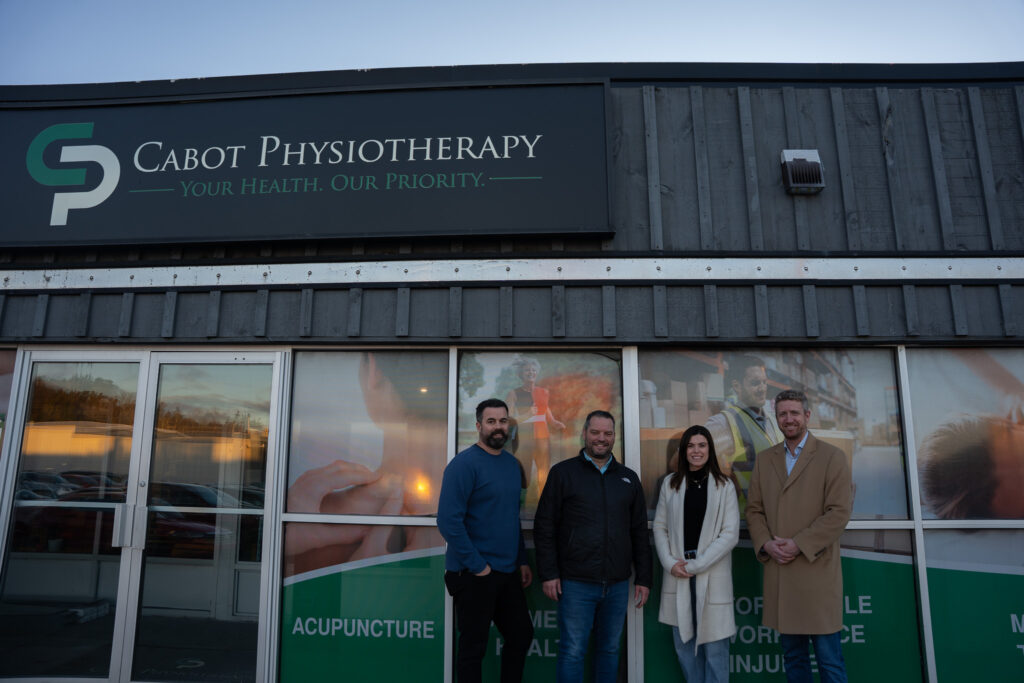
Melissa McDonough, a pelvic health physiotherapist and co-owner of Cabot Physiotherapy in Sydney River, has treated patients for nearly 20 years and says that timely access to treatment can significantly improve quality of life, reduce the risk of symptoms becoming chronic, and in some cases, eliminate the need for surgical intervention. 

“As a pelvic floor physiotherapist, I strongly support the Liberals in their initiative to seek funding for pelvic floor physiotherapy services,” said Melissa McDonough. “An investment like this has the potential to close a long-standing gap in care by making evidence-based treatment accessible to people who are under- or uninsured across the province. Pelvic floor physiotherapy is the gold standard for care for many pelvic floor conditions, including incontinence, pelvic pain, and prolapse. Funding these services is a proactive and cost-effective step toward better health outcomes for Nova Scotians.”

The Nova Scotia Liberals also introduced a Women’s Health Strategy Act during the last legislative session, which called for a comprehensive, province-wide approach to improving women’s health outcomes – including better access to services like pelvic floor physiotherapy.

Back to Newsroom

Rankin to table wellbeing budget framework to refocus government priorities

Today, Interim Liberal Leader Iain Rankin will table legislation to establish a wellbeing budget framework in Nova Scotia – a more modern approach adopted in other jurisdictions like New Zealand to measure success that puts people’s quality of life at the centre of government decision-making.

The proposed framework would shift how government evaluates spending, moving beyond traditional economic indicators like GDP to include the real-life impacts policies have on Nova Scotians. This includes physical and mental health, affordability, environmental sustainability, and access to arts and culture.

“There is a better way to define progress in our province. A strong economy is important, but it’s not the full picture,” said Rankin. “When dealing with taxpayer dollars, we need to be asking whether government decisions are improving people’s lives, supporting their wellbeing, and creating a strong economy for future generations.”

This legislative session has been marked by significant budget cuts from the Houston government with little clarity from cabinet ministers on how those decisions were made. That lack of transparency highlights the need for a better approach. A wellbeing framework would require government to clearly assess how spending decisions impact people’s lives to ensure public dollars strengthen communities and support long-term sustainability.

“Wellbeing should not be viewed as at odds with economic growth, it is foundational to it,” said Rankin. “When people are healthy, supported, and able to participate fully in their communities, our economy is stronger. This is about building a province where success is measured not just in dollars, but in the lives people are able to live.”

Back to Newsroom

OPINION: When voices are missing, so is good policy

The following is an opinion piece from the Hon. Dr. Kevin Murphy, ECNS, who served as the former MLA for Eastern Shore and first person with a disability to be elected Speaker of the Nova Scotia House of Assembly, in Canada and the Commonwealth.

There’s a simple truth we too often overlook in public life: the best decisions are made when the people most affected are at the table.

As a former MLA and the first person with a disability to be elected Speaker of the Nova Scotia House of Assembly, I’ve seen firsthand how policy is shaped – not just by good intentions, but by the voices included in the process. When those voices reflect the full range of lived experiences in our communities, policy is stronger, more thoughtful, and more grounded in reality. When they don’t, we see the consequences.

That’s why the recent situation in our province around proposed government budget cuts affecting persons with disabilities is so troubling. While I’m glad those decisions were ultimately reversed, it’s hard not to think they should never have been considered in the first place. If there was meaningful involvement from persons with disabilities, it would be difficult to imagine those cuts ever being proposed at all.

This isn’t about blame as much as it is about a broader lesson. Diverse voices and perspectives don’t just improve the process – they lead to better outcomes. People with lived experience understand the real-world impact of policies and decisions in ways that others simply can’t. That kind of insight is not a nice-to-have in policymaking; it’s essential.

Disability doesn’t affect just one group of people. It touches every family, every community, and every sector of our society. Whether through a loved one, a colleague, or our own lived experience over time, disability is something that connects us all. That’s precisely why it must be reflected in the rooms where policy making is discussed and decisions are made.

But disability inclusion doesn’t happen by accident. It requires intention. It means creating a political system that is not only accessible to persons with disabilities, but genuinely welcoming. One where persons with disabilities see themselves not just as participants, but as leaders and decision makers – serving as volunteers in local electoral district associations, as members of executive teams, as candidates, as elected officials, as policy makers, and as leaders across the public and private sectors.

We have more work to do to build that kind of system. That includes removing barriers, challenging assumptions, and actively encouraging the participation of persons with disabilities at every level.

In 2017, I founded and launched the Commonwealth Parliamentarians with Disabilities Network to support and encourage persons with disabilities to become politically engaged across Commonwealth countries. 

In 2025, I helped launch the Nova Scotia Liberal Party’s Persons with Disabilities Commission to create more pathways for persons with disabilities to engage in provincial politics and build toward a more disability inclusive province. Through that work, we’ve focused on making space for people to share their experiences, shape policy, and see a place for themselves to participate in public life.

If there’s one lesson to take from all of this, it’s that policy works best when it’s built with people, not just for them. And that starts by making sure every voice has a seat at the table.

For those persons with disabilities and their supporters who want to be part of that work, I encourage you to get involved with the party of your choice and attend your local political meetings. Reaching out to your local elected representative is good, but getting involved in the political system that selects candidates and shapes political priorities is even better. Our politics and our province are stronger when more people with disabilities are part of the conversation at every step of the way in policy making and decision making.
Back to Newsroom

Liberals push to lower colon cancer screening age amid rising cases under 50

In recognition of Colon Cancer Awareness Month, the Nova Scotia Liberals will table a bill to lower the routine age for colon cancer screening from 50 to 45. The change reflects growing evidence that more Canadians under 50 are being diagnosed with colorectal cancer, and that earlier detection saves lives.

Colorectal cancer remains one of the most commonly diagnosed cancers in Canada and the third leading cause of cancer deaths among men and women. In Nova Scotia alone, nearly 900 people are diagnosed each year, and more than 300 lost their lives to the disease. Countries like the United States and Australia have already lowered the recommended screening age to 45.

“Early detection can truly make the difference between life and death,” said Interim Leader Iain Rankin. “We’re seeing more and more people under 50 facing colorectal cancer, and this bill is a practical, evidence-based step to make screening more accessible. By catching cancer earlier, we can save lives and give people a better chance to be here for the moments that really matter.”

Kyra Hansen, a Nova Scotian who was diagnosed with stage four rectal cancer at the age of 45, knows firsthand the importance of early detection. A mother to a 16-year-old daughter, Kyra has been in treatment for a year, receiving chemotherapy and targeted therapy every two weeks. Despite the challenges, she has stayed active and working part-time, and has become a passionate advocate for earlier screening.

“Being diagnosed at 45 completely changed my life,” said Hansen. “If screening had been available at an earlier age for people like me, it’s possible my cancer could have been caught sooner when it was more treatable. I hope that by telling my story, we can encourage action that helps more people get screened earlier, and ultimately, save lives.”

Back to Newsroom

Conservatives vote down Liberal bill to limit Nova Scotia Power Profits

This afternoon, Liberals forced a recorded vote on Opposition Bill 211, legislation aimed at limiting Nova Scotia Power’s return on equity to curb the utility’s profits and make electricity rates more affordable for families. The Houston government used its supermajority to vote the bill down – on the very same day the Energy Board approved another rate hike for Nova Scotians.

In its own submission to the Energy Board, the government argued that the utility’s return on equity should be capped at 7.6 per cent. Yet when given the opportunity to enshrine that limit in law and deliver real relief, government MLAs voted against it.

“Nova Scotians are being asked to pay more, while the government refuses to act on the very solution it says it supports,” said Interim Liberal Leader Iain Rankin. “If the government truly believes Nova Scotia Power needs to be reined in, today was their chance to prove it.”

Earlier today, the Premier issued a statement expressing disappointment with the Energy Board’s decision. However, instead of being in the Legislature to vote on measures that could help lower costs, he is in Texas attending a conference.

“It’s not enough to send out a statement after the fact,” said House Leader Derek Mombourquette. “If the Premier is disappointed, he should be here taking responsibility and supporting solutions – not missing the vote when Nova Scotians needed leadership.”

Back to Newsroom